
Why Stink Bugs Crowd Winchester Homes Every Fall
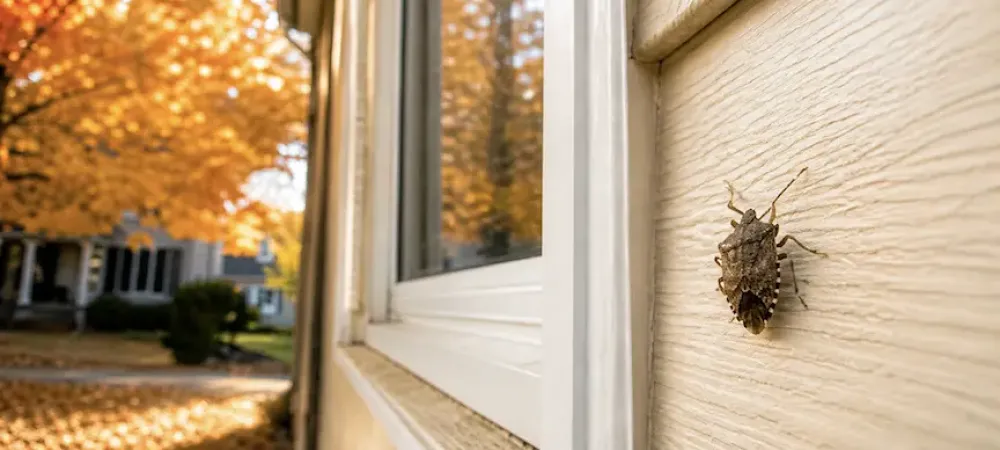
Brown marmorated stink bugs gather on Winchester and Frederick County homes from mid-September into October because they are looking for a protected place to spend the winter. Their arrival says more about the season and the surrounding orchards than about the condition of your house. Stink bugs do not bite, breed indoors, or damage the structure, and the window to keep most of them out is short and predictable.
Frederick County grows more apples than any other county in Virginia, and brown marmorated stink bugs feed heavily on tree fruit all summer. According to Virginia Cooperative Extension's Frederick County situation analysis, the county harvested about 40% of Virginia's apple acreage in the 2017 Census of Agriculture, the most recent census figures in that report. Big late-summer food supplies mean big fall stink bug numbers looking for shelter nearby.
The brown marmorated stink bug is native to Asia and arrived in the United States in the mid-1990s, with its heaviest concentrations in the mid-Atlantic, according to the U.S. Environmental Protection Agency. Virginia Tech reports the pest was first found in Virginia in 2004, and researchers at its Alson H. Smith Jr. Agricultural Research and Extension Center in Winchester have studied its biology and management in tree fruit.
Stink bugs also favor invasive trees such as tree of heaven, which Virginia Tech entomologists identified as an attractive host. Homes near orchards, wood lines, or roadside stands of those trees start the fall with stink bugs already close by. The same orchard season also draws other late-summer pests, which we cover in our post on why yellow jackets cluster around fruit trees.
No. Stink bugs found indoors in fall and winter are adults sheltering until spring, and the EPA states they will not reproduce in homes or cause structural damage.
Stink bug biology explains why. Virginia Cooperative Extension describes adults overwintering in field borders, crop residue, or buildings, then emerging in spring to feed and lay eggs on plant leaves outdoors. A stink bug crawling across the kitchen on a warm January afternoon is one that got in last fall and woke up early, not the start of a new generation.
That distinction changes how stink bugs should be treated. Indoor spraying kills the stink bugs you can see, but the EPA notes that aerosol and fogger products will not stop more from emerging out of wall voids and cracks once the product dries.
Killing a stink bug does not attract more stink bugs, according to the National Pesticide Information Center. The real attractant is a chemical scent a stink bug releases once it finds a good winter shelter, which draws other stink bugs to the same spot.
That scent is why stink bugs seem to pile into the same window frame or attic corner year after year. Quickly removing stink bugs that get inside, and sealing the gap they used, breaks the signal. Crushing them releases their defensive odor, so a vacuum or a container of soapy water is the better tool.
The best time to stop stink bugs is before and during their fall aggregation, which in the Winchester area generally runs from mid-September into October. Once stink bugs are inside the walls, the job shifts from prevention to managing them until spring.
The National Pesticide Information Center notes that indoor pesticide use is often ineffective against stink bugs, while outdoor perimeter treatments can work when applied at the correct time of year. For Winchester homes, that means acting in early fall, not after the curtains are covered.
Exclusion does the heavy lifting. The EPA recommends these steps to keep stink bugs from getting in:
- Caulk around windows, inside and out.
- Add weather stripping or a door sweep anywhere daylight shows around a door.
- Inspect for and seal foundation cracks, and secure crawl space entries.
- Caulk small gaps around exterior pipes and fill larger ones with steel wool.
- Cap or screen the top of the chimney.
- Rake debris and vegetation away from the foundation.
Vacuum stink bugs up or knock them into a container of soapy water, and avoid crushing them. The EPA notes the vacuum may smell like stink bugs for a while afterward, so many homeowners set aside an older vacuum for the season.
A simple light trap can catch many stink bugs indoors. NPIC describes placing a pan of soapy water in a dark room with a light pointed toward it. Traps reduce numbers but do not close entry points, so pair any trap with sealing.
Stink bugs do not bite people or pets and are not known to transmit disease, according to the EPA. Some people may be sensitive to allergens stink bugs give off, so heavy indoor numbers are worth addressing for comfort as well as cleanliness.
Exterior sealing and correctly timed perimeter treatment are the parts of stink bug control that are hardest to do well on your own. If you would rather hand that off, our Winchester pest control service can inspect your home and help you get ahead of next fall's rush.
Adult brown marmorated stink bugs move onto and into buildings in early fall to find shelter for the winter. Frederick County's orchards give them plenty of food all summer, so fall numbers around Winchester can be high.
No. The EPA states stink bugs do not cause structural damage or reproduce inside homes. They are a nuisance pest, not a structural one.
Stink bugs do not bite people or pets and are not known to spread disease. Some people may be sensitive to allergens they give off.
Stink bugs often return to the same homes because sheltering stink bugs release a scent that attracts others. Sealing entry points and timing exterior treatment for early fall are the best ways to cut next year's numbers.
Stink bugs sheltering in wall voids or the attic can become active on warm winter days and wander into living spaces. These are the same adults that entered in the fall, not a new infestation.
Still on the outside walls, or already on the curtains? Call Petti Pest Control at 540-667-9997 and we will help you figure out the right next step before the season gets away from you.