
Why Yellow Jackets Cluster Around Fruit Trees in Late Summer
In This Article
Why Yellow Jackets Cluster Around Fruit Trees in Late Summer
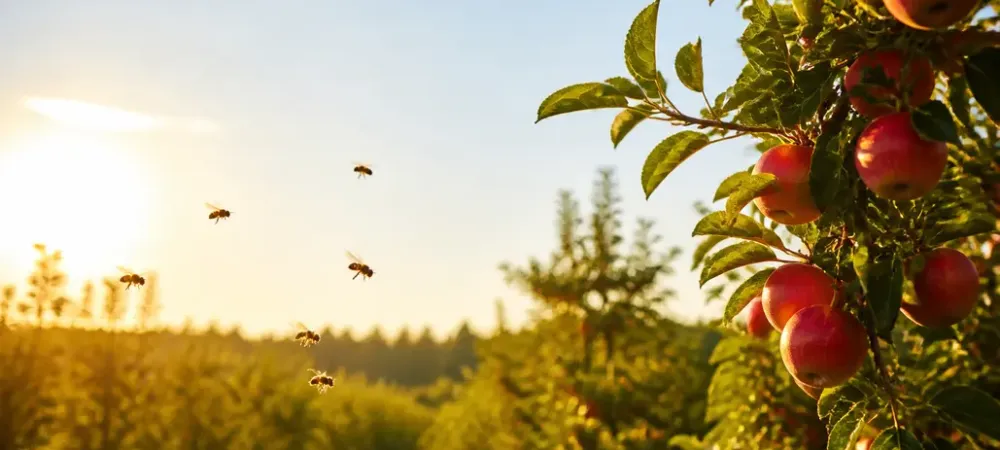
Yellow jackets cluster around fruit trees in late summer because their diet shifts at exactly the same time fruit starts to ripen and drop. According to Virginia Cooperative Extension, yellow jackets feed protein to their developing larvae for most of the season, then shift to nectar, ripe fruit, and other sugar sources later in the year once that protein demand drops off.
Winchester and the surrounding Northern Shenandoah Valley sit in the heart of Virginia's apple country, home to the majority of the state's orchards according to Virginia Cooperative Extension's tree fruit program. That concentration of ripening and dropped fruit gives yellow jacket colonies an unusually reliable sugar source right as their populations peak for the year, which is exactly why orchard-adjacent properties see so much late-summer activity.
Ground Nests vs. Aerial Nests Near an Orchard
An orchard property typically deals with two different yellow jacket nest types at once, and knowing which one you're looking at changes where the real risk is. Virginia Cooperative Extension identifies two distinct groups: ground and wall-nesting yellow jackets in the genus Vespula, and aerial nest builders in the genus Dolichovespula that build directly on tree branches.
| Trait | Vespula (Ground/Wall) | Dolichovespula (Aerial) |
|---|---|---|
| Nest location | Underground, hollow trees, wall voids | Tree branches, shrubs, eaves |
| Biggest orchard risk | Mowers and foot traffic disturbing a hidden ground entrance | Fruit pickers reaching directly into branches near a nest |
| Entrance holes | Often more than one entrance | Single entrance, usually near the bottom of the nest |
| Reused next year? | No, nests fail in fall and aren't reused | No, nests fail in fall and aren't reused |
Why You Shouldn't Plug or Seal a Nest Yourself
Plugging a yellow jacket nest entrance in a wall or structure can backfire badly, since the workers may chew a new entrance through the wall to escape, sometimes straight into a living space or barn interior instead of back outside. Virginia Cooperative Extension specifically warns against sealing entrances found in building walls for this reason, recommending nest treatment instead of a plug.
Why Repeated Stings Are a Real Risk, Not Just Discomfort
A single yellow jacket can sting multiple times, and an agitated nest releases an alarm pheromone that pulls in nearby nestmates to attack as a group. That combination is what turns a single accidental disturbance, like a mower running over a hidden ground nest, into a multi-sting event rather than one bee sting most people can shake off.
What Actually Reduces Yellow Jacket Pressure Near Fruit Trees
Removing food sources and closing off access to them works better than broad spraying across a property, since new foraging workers keep arriving from colonies outside the treated area regardless of how much is sprayed. Picking up dropped fruit regularly, keeping trash containers covered, and having active nests located and treated directly are the combination Virginia Cooperative Extension points to as most effective.
A pest control treatment from Petti Pest Control targets nests directly, including ground nests that are easy to miss until someone runs a mower over one, rather than relying on general sanitation alone to keep pressure down through the rest of harvest season.
Yellow Jackets Getting Aggressive Near Your Trees?
Get active nests located and treated before harvest brings more foot traffic through the orchard.
Call 540-667-9997