
Carpenter Ants vs. Termites in Berkeley County
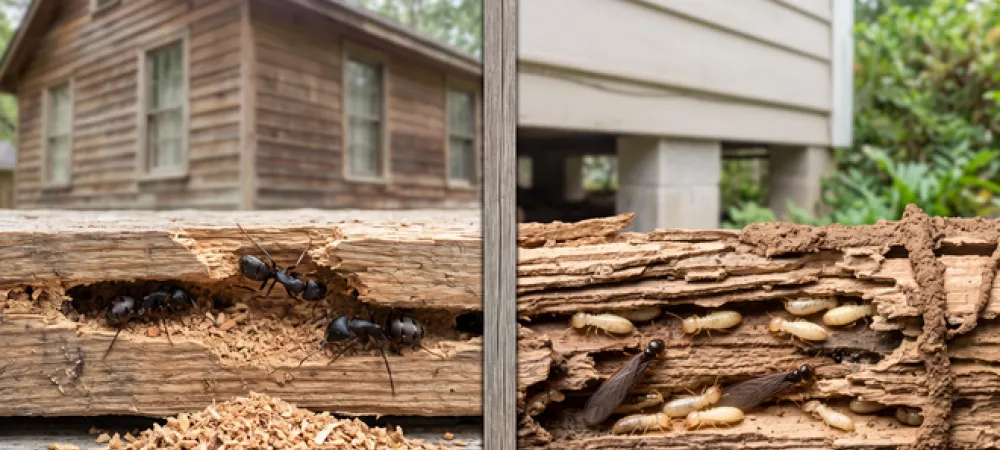
Carpenter ants and termites both damage wood in Berkeley County homes, but they do it in completely different ways, and treating one like the other wastes money while leaving the real problem untouched. Carpenter ants excavate wood to build nests. Termites eat wood as food. That difference changes what treatment actually works, which is why identifying the right pest matters more than most homeowners realize.
Carpenter Ants and Termites Damage Wood in Different Ways
Carpenter ants tunnel through wood to create smooth, clean galleries where they nest and raise young. They don't consume the wood itself. They push it out of the way, leaving small piles of sawdust-like debris called frass near the entry points. Termites work the opposite way. They eat wood as their primary food source, and their tunnels are often packed with mud-like material instead of kept clean. A termite colony left untreated can hollow out structural framing from the inside. A carpenter ant colony causes damage more slowly and is often a sign of an existing moisture problem rather than the root cause itself.
Why Berkeley County's Older Homes See Both Pests
A large share of homes in Berkeley County date back to the 1960s and 70s, and that age gives both pests decades of opportunity to find a way in. Older wood trim, aging foundations, and small gaps around windows and siding widen over time, especially with the humidity swings typical of the Eastern Panhandle. Carpenter ants specifically look for wood that's already damp or has some rot starting, often near a leaking gutter, an old deck ledger board, or a crawl space with poor drainage. Termites don't need existing damage to get started. They build mud tubes from the soil straight up to untouched wood, which is why a home can look fine on the outside while a termite colony is actively feeding underneath the siding.
Signs of Carpenter Ants vs. Termites: A Side-by-Side Comparison
The clearest way to tell carpenter ants and termites apart is by looking at what they leave behind, not just the size of the visible insects.
| Sign | Carpenter Ants | Termites |
|---|---|---|
| Wood debris | Sawdust-like frass pushed out of small entry holes | No visible debris; wood often sounds hollow when tapped |
| Tunnel appearance | Smooth, clean galleries with rounded edges | Tunnels packed with mud and soil-like material |
| Swarmer wings | Two pairs of unequal-length wings, bent antennae | Two pairs of equal-length wings, straight antennae |
| Mud tubes | Not present | Pencil-width mud tubes running up foundation walls |
| Typical location | Near existing moisture damage, decks, window frames | Anywhere wood contacts or sits near soil |
The Myth: "If I See Wood Damage, It Has to Be Termites"
Wood damage in an older Berkeley County home doesn't automatically mean termites, and assuming it does can lead to the wrong treatment while the actual problem keeps growing. Carpenter ants cause real damage too, just through a different mechanism, and a termite-specific treatment won't touch an active carpenter ant colony since there's no wood being consumed for a bait or liquid barrier to intercept. The reverse is also true. Treating an actual termite issue with general ant control leaves the colony intact and the structural damage ongoing. Correct identification has to come first, before any treatment decision.
Who's Licensed to Treat Wood-Destroying Insects in West Virginia
As of 2026, West Virginia requires pest control businesses and applicators to be licensed through the West Virginia Department of Agriculture's Pesticides Program before they can legally treat termites or other wood-destroying insects in a home. That licensing exists because termite and carpenter ant treatment involves real structural and chemical decisions, not a one-size-fits-all spray. Petti Pest Control's technicians are licensed under this program and trained to identify which pest is actually present as part of our general pest control service, so homeowners aren't paying for a treatment that doesn't match the problem.
What to Do If You Spot Carpenter Ants or Termites in Your Home
The first step with either pest is a professional inspection, not a DIY spray that might mask the problem without solving it. Save any wings, frass, or wood samples you find so a technician can identify the species quickly, and avoid disturbing mud tubes or nest entry points before the inspection since that can scatter the colony and make it harder to locate. Both pests tend to be more active in Berkeley County during warmer, humid stretches of the year, so a problem noticed in spring or summer is worth acting on quickly rather than waiting. If you're weighing whether a new-construction home needs protection too, we've also covered whether new construction homes need termite pretreatment.
Not sure whether it's carpenter ants, termites, or something else digging into your home's wood in Berkeley County?
Call Petti Pest Control