
5 Pests a Damp Basement Invites Into Winchester Homes
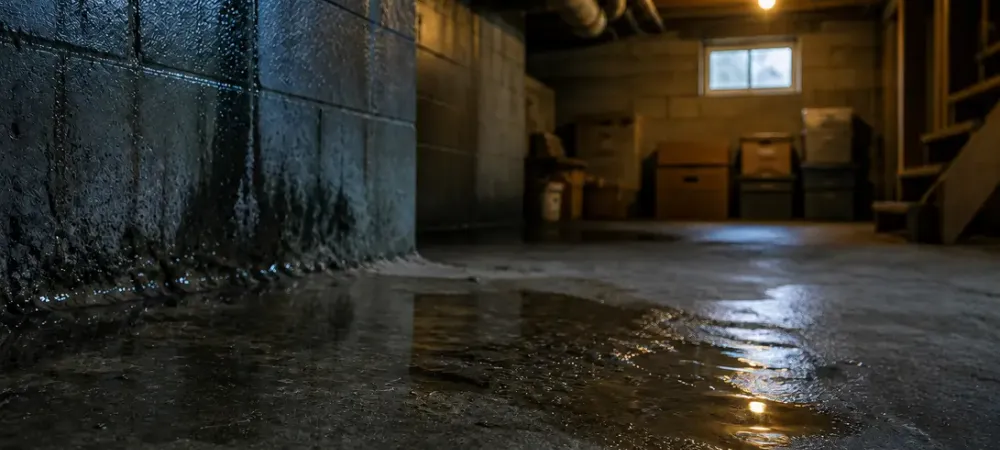
A damp basement attracts pests because it gives them three things at once: water, food in the form of mold and decaying material, and dark, undisturbed places to hide. Most of the pests that show up are harmless nuisances, but a couple of them point to moisture damage worth catching early.
Much of Frederick County's suburban development east of Interstate 81 sits on Martinsburg shale, which the county's comprehensive plan describes as producing thin, compacted soils with high seasonal water tables. Soil that holds water close to the surface keeps pressure on foundation walls through wet seasons.
West of Interstate 81, a band of limestone bedrock with karst topography runs through the county, and the same plan notes drainage there can follow irregular patterns, with some areas that drain internally. Neither condition guarantees a wet basement, but both help explain why moisture shows up in basements that otherwise seem well built.
Older homes with stone or rubble foundations add another factor. Mortar joints can pass moisture and small pests more easily than poured concrete, especially as they age.
Each of the five pests below is drawn in by a specific moisture condition, so the pest you find is a clue to where the water problem is and how serious it might be.
Millipedes move into basements and garages in the fall looking for damp, dark shelter, and Virginia Cooperative Extension notes they often cannot survive indoors for long unless humidity is high. A steady stream of millipedes is a humidity signal as much as a pest problem.
VCE reports that houses on wooded lots with walkout basements, or patios tucked under upper decks, are especially attractive to millipedes. Heavy mulch against the foundation and firewood stacked against the house give them habitat right at the door. Millipedes do not bite, sting, or damage wood, and VCE notes perimeter treatments work best when applied before the fall movement begins.
Silverfish need humidity to survive and feed on paper, cardboard, glue, and even mold, according to Virginia Cooperative Extension. A damp basement full of stored boxes is close to an ideal home for them.
Silverfish populations build slowly, so VCE notes a large silverfish infestation usually means the building has been infested for a while. A dehumidifier and clearing out old papers and boxes both help, but VCE states that sanitation alone will probably not eliminate an established infestation.
Springtails are tiny jumping arthropods that cannot live without steady moisture, and they graze on mold and decaying organic matter in damp basements and bathrooms, according to Virginia Cooperative Extension.
Springtails are harmless and only a nuisance. VCE notes that managing moisture is more effective than insecticide sprays for springtails, so running a dehumidifier, improving ventilation, and cleaning mold and mildew often solves the problem. Seeing springtails means moisture or mold is present somewhere nearby.
Spiders in a damp basement are usually a sign of the insects around them, since a basement with millipedes, silverfish, and springtails is a well-stocked hunting ground.
Knocking down webs helps in the short term, but spider numbers follow the food supply. Reducing moisture, and the insects that come with it, is what brings a basement spider population down over time.
Carpenter ants do not damage sound wood. Virginia Cooperative Extension explains that carpenter ants nest in wood that water has already softened or rotted, so finding them indoors means there is water damage somewhere in the building.
VCE also notes that carpenter ants active indoors in late winter or early spring usually point to a nest inside the house. Look for sawdust-like debris near sills, door frames, and any wood in contact with soil.
Subterranean termites are the other moisture-driven wood pest, and damp sill plates, wood-to-soil contact, and leaking plumbing all raise the risk. Termite damage can be costly, so mud tubes or damaged wood deserve a professional termite inspection. If you are seeing winged insects in spring, our guide on when termites swarm can help you tell what you are looking at.
Use the pest you find as a starting point for where to look.
| Pest | Moisture Signal | What It Tells You |
|---|---|---|
| Millipedes | High humidity at ground level, mulch or leaf litter against the foundation | Outdoor moisture and habitat are pushing them in, so check door sweeps and foundation gaps |
| Silverfish | Humid storage areas with paper or cardboard | Humidity has likely been high for a long time |
| Springtails | Mold, mildew, or constantly damp surfaces | An active moisture source is nearby, such as a leak or poor ventilation |
| Spiders | A steady supply of other insects | The basement is supporting a larger insect population |
| Carpenter ants or termites | Water-damaged wood or wood in contact with soil | Possible structural moisture damage that warrants an inspection |
A dehumidifier helps, but it only solves the problem for some pests. For springtails, VCE says managing moisture is more effective than spraying, so drying out the space may be enough. For silverfish, VCE notes sanitation alone probably will not eliminate an established infestation, and for carpenter ants, both the nest and the water-damaged wood have to be dealt with.
A dehumidifier does nothing about the openings pests use to get in. The most lasting fix pairs moisture control with sealed foundation cracks, working door sweeps, and clean window wells, then treats whatever is already established inside.
If basement pests keep coming back after you have dried things out, our general pest control service in Winchester can find the entry points and treat what the dehumidifier cannot reach.
Most basement pests are drawn in by moisture. Damp air, mold, and stored paper or cardboard give millipedes, silverfish, and springtails water, food, and shelter.
No. Basement pests usually point to moisture and entry points, not housekeeping. A spotless basement with high humidity can still attract springtails and silverfish.
A dehumidifier helps with moisture-dependent pests like springtails but usually is not enough on its own for silverfish or carpenter ants. Pair it with sealing entry points and treating established pests.
Millipedes are harmless. Virginia Cooperative Extension notes they do not bite, sting, or damage wood, and they usually cannot survive long indoors unless humidity is high.
Carpenter ants and termites. Carpenter ants nest in wood that water has already damaged, and termites can cause costly structural damage, so either one warrants a professional inspection.
Millipedes by the door, or sawdust by the sill? Call Petti Pest Control at 540-667-9997 and we will help you figure out what you are dealing with and the right next step.
- Frederick County, VA: Comprehensive Plan, Appendix II Background Analysis
- Virginia Cooperative Extension: Greenhouse Millipedes (ENTO-43)
- Virginia Cooperative Extension: Silverfish and Firebrats (ENTO-24)
- Virginia Cooperative Extension: Springtails (ENTO-23)
- Virginia Cooperative Extension: Carpenter Ants (3104-1573)