
Why New-Construction Communities Have More Mosquito Pressure
In This Guide
Why New-Construction Communities Have More Mosquito Pressure
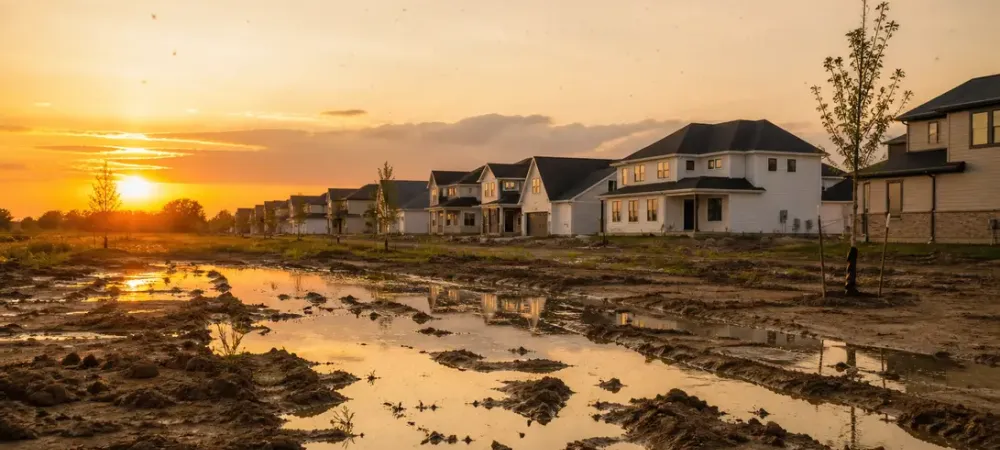
New-construction communities in Loudoun County often deal with heavier mosquito pressure than older, established neighborhoods because the ground itself hasn't finished settling. Fresh grading, immature sod, and drainage systems that haven't been tested by a full season of rain all create small pockets of standing water that a mature yard usually doesn't have.
Loudoun County requires new developments to install stormwater management features like wet ponds, rain gardens, and constructed wetlands under its Stormwater Management Program. Those features are built correctly from day one, but the yards and common areas around them take a season or two to mature and drain the way they're designed to.
The Retention Pond Myth
The neighborhood retention pond is usually not the source of a mosquito problem, despite being the first thing residents blame. According to the Northern Virginia Soil and Water Conservation District, properly functioning wet ponds support fish, frogs, and dragonflies that prey on mosquitoes at every life stage, which makes a healthy pond a poor breeding site rather than a good one.
The real culprits are smaller and closer to the house: shallow spots that hold water for a few days and then dry out, which is exactly the cycle mosquitoes need. A maintained pond with fish rarely offers that. A depression in new sod after a rainstorm does.
Where Mosquitoes Actually Breed on a New-Construction Lot
Mosquitoes breed on a new-construction lot in the small, temporary water sources that come with a property still settling in, not in the engineered stormwater features.
- Uneven new sod grading: fresh lawns settle unevenly in the first year or two, leaving shallow low spots that hold rainwater for days.
- Unfinished or unestablished swales: drainage channels that haven't grown in with grass yet often pool instead of flowing.
- Downspouts not yet extended: new builds sometimes ship with short downspouts that dump water right against the foundation instead of away from the yard.
- Leftover construction materials: buckets, tarps, and equipment left on site can hold water for weeks without anyone noticing.
- Immature HOA common areas: newly planted retention basins and green spaces take time to establish the drainage and plant life that keep water moving.
What You Can Control vs. What's the HOA's Job
A homeowner can only treat what's on their own lot, which means the retention pond, common-area drainage, and shared green spaces stay the HOA's responsibility no matter how well an individual yard is maintained. That split matters, because a homeowner who seals up their own yard perfectly can still deal with mosquito pressure drifting in from an HOA-maintained area nearby.
That's why yard treatment has to account for pressure from outside the property line, not just what's happening on it. Petti Pest Control's mosquito control service in Leesburg treats the vegetation and resting sites on a property itself, since that's the part within a homeowner's control, regardless of what's happening two lots over.
How to Reduce Mosquito Pressure Around a New Build
- Check for low spots after it rains. Walk the yard a day after a storm and note anywhere water is still sitting.
- Extend downspouts away from the house. Water pooling against the foundation is one of the easiest fixes on a new build.
- Clear standing water from job-site leftovers. Buckets, tarps, and unused materials are common overlooked breeding spots during the first year.
- Ask the HOA about common-area maintenance timing. Knowing when retention basins and shared green spaces get serviced helps explain pressure spikes that aren't coming from your own yard.
Frequently Asked Questions
Does the neighborhood retention pond cause mosquitoes?
Usually not, if it's a properly functioning wet pond. Wet ponds support fish, frogs, and dragonflies that prey on mosquitoes, which makes a healthy, maintained pond a poor breeding site compared to small, temporary pockets of standing water elsewhere on a property.
Why does a brand-new home have more mosquitoes than an older one nearby?
New sod, unestablished swales, and drainage systems that haven't been tested by a full season of rain all create shallow, short-term standing water. Established yards have usually already worked out these drainage issues, while new construction is still settling in.
Who is responsible for mosquito control in HOA common areas?
The HOA is responsible for maintaining shared green spaces, retention basins, and community drainage features, while a homeowner is only able to treat their own lot. This split means mosquito pressure can still drift in from a nearby common area even when a yard is well maintained.
How long does it take for a new-construction yard's drainage to mature?
Most new sod and unestablished swales take one to two full growing seasons to develop the root structure and grading stability that let water drain properly instead of pooling.
Dealing With Mosquitoes Around a New Build?
Get your yard's resting sites and vegetation treated, or ask us how HOA common areas factor into your mosquito pressure.
Call 540-955-9997