
Why Older Homes Need a Different Termite Approach
In This Article
- Why Older Homes in Jefferson County Need a Different Termite Approach
- What West Virginia's Existing-Structure Standard Actually Requires
- Why Historic Foundations Change the Treatment Approach
- New Construction Pretreatment vs. Existing-Structure Treatment
- What to Expect From an Inspection on an Older Home
- FAQ
Why Older Homes in Jefferson County Need a Different Termite Approach
Older homes in Jefferson County need a different termite treatment approach because West Virginia regulates new construction and existing structures under two separate standards, and a home built before modern pretreatment became standard practice likely never received a soil barrier at all. West Virginia's Wood Destroying Insect Treatment Standards set specific requirements for treating existing structures, separate from the new-construction pretreatment rule that applies to homes built today.
A home that predates that pretreatment standard, or a historic structure with additions built across different decades, is working from a different starting point than a new-construction house that got a continuous soil barrier installed before the slab ever went down.
What West Virginia's Existing-Structure Standard Actually Requires
West Virginia's rule for treating existing structures, § 61-12C-4, sets different treatment procedures depending on the foundation type, including separate standards for structures with basements, slab-on-ground construction, and crawl space construction. The rule also requires that any termite shelter tubes be removed before a pesticide application, since treating over an existing tube doesn't address the termites still using it.
Porches and entrance platforms get their own treatment procedure under the same rule, which matters for older homes specifically since additions like porches are often where the original foundation ends and a later addition begins.
Why Historic Foundations Change the Treatment Approach
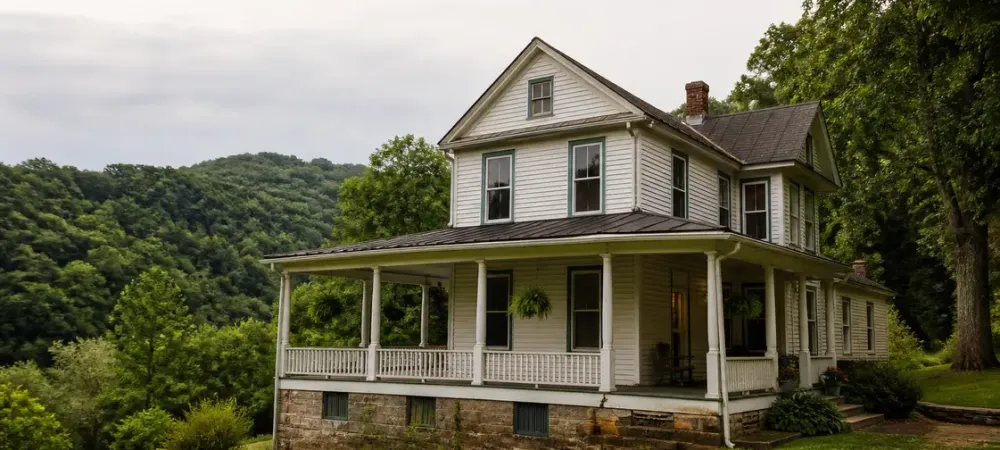
Jefferson County's older housing stock, concentrated around Charles Town and Harpers Ferry, often sits on stone or masonry foundations rather than the poured concrete slabs standard in new construction. Stone and masonry foundations have mortar joints and irregular gaps that a technician has to account for individually, unlike a slab, which presents one continuous, predictable surface for a barrier treatment.
Additions built onto a historic structure over the decades often create wood-to-soil contact points that wouldn't exist in a home built to current standards, since older porches, sunrooms, and mudrooms weren't always built with the same soil clearance requirements used today. Each of those contact points is a potential entry route that has to be identified individually rather than assumed away by a uniform foundation type.
New Construction Pretreatment vs. Existing-Structure Treatment
Pretreatment happens before a slab pours, giving a technician direct access to bare soil to build a continuous barrier under and around the future foundation. Existing-structure treatment works in reverse, drilling or trenching around a foundation that's already in place, which is a more limited and more labor-intensive process precisely because the direct soil access pretreatment relies on is no longer available.
That difference is why an older home can't simply get "the same treatment" a new build receives. The regulatory standard itself treats them as different processes because the physical conditions are different.
What to Expect From an Inspection on an Older Home
An inspection on an older home typically takes longer than one on new construction, since a technician has to check multiple foundation types, addition seams, and wood-to-soil contact points individually rather than evaluating a single continuous slab. A termite inspection in Charles Town from Petti Pest Control accounts for that added complexity rather than applying a new-construction checklist to a home that was never built to that standard.
Frequently Asked Questions
Do older homes need different termite treatment than new homes?
Yes. West Virginia regulates new construction and existing structures under separate standards, since a new build gets a continuous soil barrier before the slab pours, while an existing home requires drilling or trenching around a foundation that's already in place.
Why do stone foundations complicate termite treatment?
Stone and masonry foundations have mortar joints and irregular gaps that need individual attention, unlike a poured concrete slab, which presents one continuous surface for a barrier treatment.
Does an old home addition need separate termite treatment from the original structure?
Often, yes. West Virginia's existing-structure standard includes a separate treatment procedure for porches and entrance platforms specifically, since additions frequently mark where the original foundation ends and different soil contact conditions begin.
What happens to termite shelter tubes during treatment?
West Virginia's existing-structure standard requires shelter tubes to be removed before a pesticide application, since treating over an existing tube doesn't address the termites still actively using it.
Living in an Older Jefferson County Home?
Get a termite inspection built around your home's actual foundation type and construction history.
Call 304-725-9997